Skip to product information
1 of 12

Valley Outdoor Supply

Polycarbonate Corrugated Roofing Panels | PNW Rated

Regular price $27.00 USD
Regular price Sale price $27.00 USD
Sale Sold out
Shipping calculated at checkout.
Choose a Length
Quantity
Product description — version: 2026-01-20_v2.0 FINAL PRODUCTION (LOCKED)

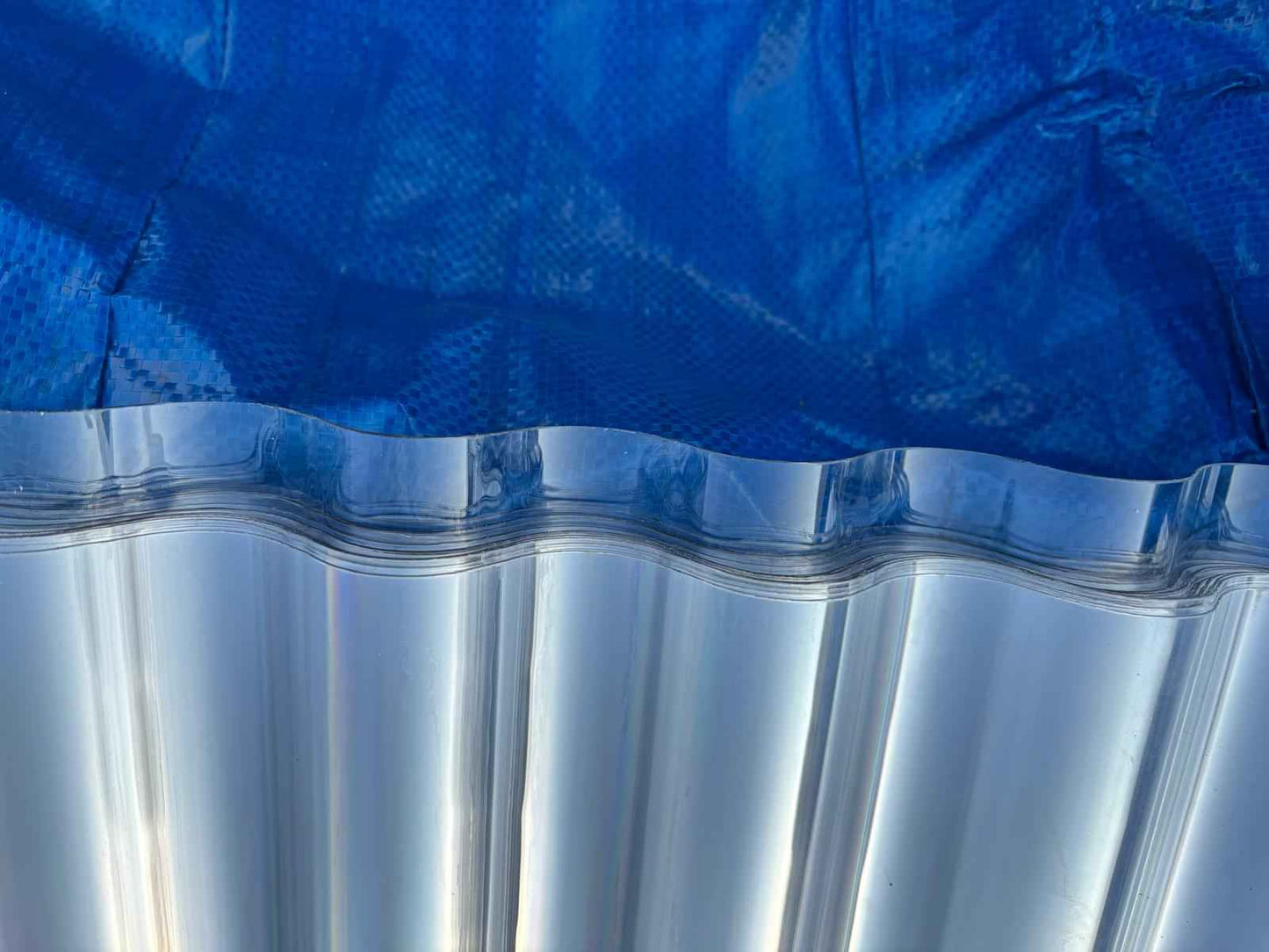
Premium Polycarbonate Corrugated Roofing Panels — Built for Pacific Northwest Weather

Appointment only — Call 360-916-8312 to schedule pickup or request a delivery quote.
Tap each section below to expand or collapse details.

What it is: Professional-grade 0.9 mm polycarbonate panels engineered with advanced UV protection for lasting clarity and impact resistance in wet, high-moisture environments.


Scroll or tap a section below

Quick summary

Built for wet climates — polycarbonate does not absorb water, delaminate, or turn brittle like many economy plastics

True 0.9 mm thickness — improved rigidity and better handling on ladders and during installation

UV protection — helps maintain clarity and reduce premature yellowing when installed correctly (UV side up)

Profile match — corrugated profile aligns with standard 26.5 inch corrugated metal patterns for daylighting or mixed roofs

Buy the accessories that finish the job

Most installs need the correct fasteners and polycarbonate-specific hardware. Add them now so you are not stuck mid-project.

Tip: Do not over-tighten fasteners — polycarbonate needs room to move with temperature changes.

✅ Why these panels are superior (PNW focus)

Designed specifically for Pacific Northwest exposure — constant moisture, freeze-thaw cycling, and UV degradation.

  • True 0.9 mm thickness for rigidity and better handling
  • UV-protected polycarbonate resin helps maintain clarity and reduce premature yellowing
  • High light transmission without brittleness common in economy plastics
  • Matches standard 26.5 inch corrugated metal profiles for predictable overlap and mixed-roof daylighting
PNW advantage: Polycarbonate does not absorb water, delaminate, or crack like many fiberglass or PVC products.
Back to top ↑
🔄 Polycarbonate vs PVC panels
  • Strength: Polycarbonate is dramatically more impact-resistant than PVC
  • Cold weather performance: Better resistance to cracking in winter conditions
  • Heat handling: More stable under sun exposure with less warping

PVC panels commonly fail within a few seasons in the PNW. Polycarbonate is engineered for long-term outdoor exposure when installed correctly.

Back to top ↑
📏 Specifications

Thickness: 0.9 mm (0.035 inch)
Panel width: 26.5 inches physical
Lengths: 8 ft, 10 ft, 12 ft, 14 ft
Material: UV-protected polycarbonate
Profile: Corrugated

Coverage note
Plan quantities using effective coverage after overlap, not raw sheet width.
Back to top ↑
⚠️ Important installation notes (read first)
Key rules for polycarbonate
  • Do not over-tighten fasteners — allow panel movement
  • UV-protected side faces sky
  • Use oversize holes to allow for thermal expansion
  • Fasten on the rib peak, not the valley
Back to top ↑
🏆 Best uses
  • Greenhouses and hoop houses
  • Patio and pergola roofing
  • Carports and livestock shelters
  • Daylighting panels paired with corrugated metal roofing
Back to top ↑
Frequently asked questions
How much overlap is required?
Standard corrugated overlap is typically one full rib. Coverage is reduced accordingly.
Can polycarbonate be mixed with metal roofing?
Yes. These panels match standard 26.5 inch corrugated metal profiles, making daylighting sections possible when detailed correctly.
Do these panels expand?
Yes. Oversized holes are required to allow thermal expansion and contraction.
Which side faces up?
The UV-protection is on either side.
Back to top ↑

Plan your project

Use our guides and calculator so you order the right quantity the first time.

Reminder: calculate using effective coverage (after overlap), and follow expansion rules for polycarbonate.
Back to top ↑


FAQ

Why is 0.9 mm polycarbonate better than standard store-bought panels?

Most "big-box" stores sell 0.8 mm or thinner PVC panels, which can become brittle and crack in PNW winters. Our professional-grade 0.9 mm polycarbonate offers superior impact resistance and structural rigidity, ensuring it holds up against heavy rain, wind, and light snow loads without warping.

How much overlap do I need to calculate for these panels?

While the physical panel width is 26.5 inches, you should plan for an "effective coverage" of 24 inches. This allows for a standard one-rib overlap, which is essential for creating a watertight seal in high-moisture environments like Lake Stevens and the surrounding areas.

Will these clear panels turn yellow or cloudy over time?

No. Unlike cheaper PVC or fiberglass alternatives, our polycarbonate is treated with a high-performance UV-protective resin. This prevents yellowing and maintains maximum light transmission for years, making it the ideal choice for greenhouses and patio daylighting.

Can I install these panels directly alongside corrugated metal roofing?

Yes. These panels are specifically chosen because their profile matches standard 26.5-inch corrugated metal patterns. This allows you to easily integrate "skylight" sections into a metal roof for natural daylighting, provided you use the correct fasteners and allow for thermal expansion.

What is the best way to cut these panels to a custom length or width?

You can easily cut polycarbonate panels using a fine-toothed circular saw or a jigsaw with a metal-cutting blade for clean, professional edges. For smaller adjustments, a pair of heavy-duty tin snips also works well. To avoid cracking, always support the sheet close to the cut line and keep the protective film on until you are finished.

Why do I need to drill oversized holes for the fasteners?

Polycarbonate expands and contracts with the changing temperatures of the Pacific Northwest. You must pre-drill holes that are roughly 10% larger (about 10mm or 3/8") than the screw diameter. This "clearance hole" allows the panel to move slightly without buckling or cracking around the screw over time.

How do I keep my panels clear and clean?

To maintain maximum light transmission, clean your panels twice a year using lukewarm water, a mild dish soap, and a soft microfiber cloth. Never use ammonia-based cleaners (like Windex), abrasive pads, or a high-pressure washer, as these can scratch the surface or damage the UV-protective coating.
View full details